
Alnwick's £2.6m Cobbles Revamp Is the Opening Move in a Heritage-Led Bet on the High Street
Northumberland County Council starts a £2.6m Cobbles restoration in Alnwick this week — the opening move in a multi-funder heritage regeneration bet.

Focused on business and markets coverage across the UK, Europe, and the United States. His writing has been featured in Business Insider and USA TODAY.
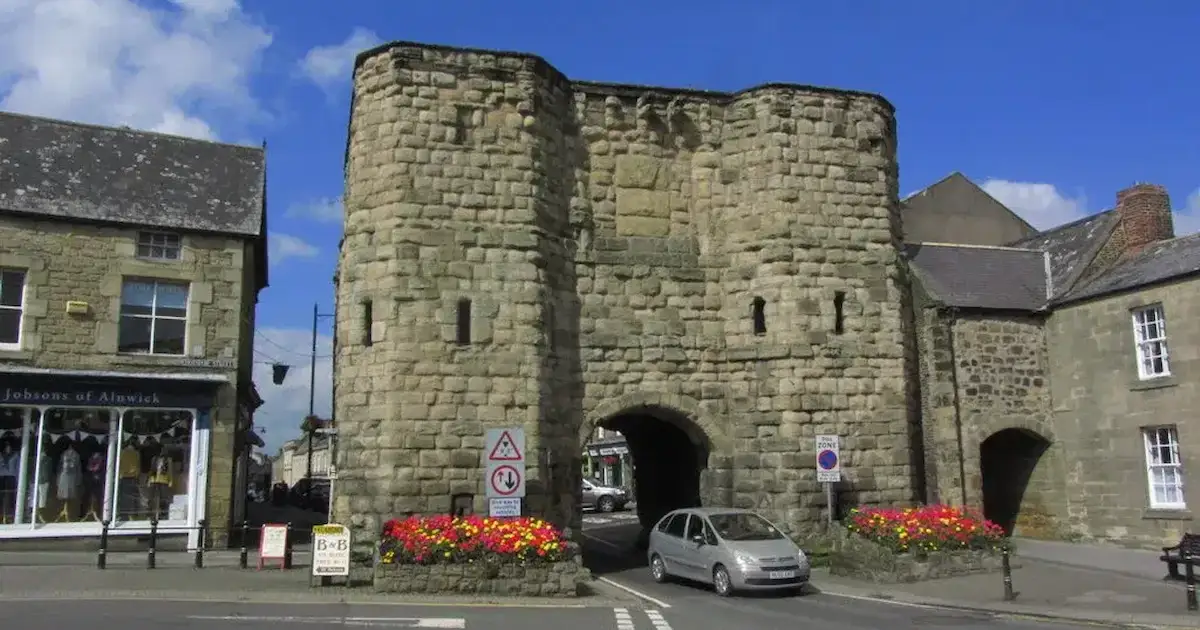
A Northumberland market town is layering council cash, cross-border growth funding and lottery money into a coordinated regeneration plan. The first spade goes in on Monday.
Alnwick is best known for its castle. From Monday, attention shifts to the stone beneath its shoppers' feet. The £2.6 million scheme, led by Northumberland County Council, begins on September 28 and is due for completion in autumn 2027, restoring the historic Cobbles area on Bondgate Within, the main parking and gateway space at the heart of the town's conservation area.
On its own, it's a public realm upgrade. In context, it's the first delivery milestone in a multi-project, multi-funder strategy that could become a template for how smaller UK towns fund their own revival.
What is actually being built
The brief is to preserve character while fixing function. The council plans to lift, clean and relay the cobblestones on Bondgate Within and improve the car parking layout. The planning application also covers a new footway on the southern edge of Market Street, a rain garden, and repairs to two listed drinking fountains, known locally as "pants."
The design keeps what makes the space distinctive. Local councillors say the historic wagonway along the top edge will be lifted and re-laid, while the parking area will be renewed with flatter, safer natural stone setts. Engineering consultancy Cundall, which worked on the scheme with the council, says the approach combines heritage restoration with drainage, sustainable urban drainage systems, landscaping and accessibility improvements.
The case for intervention was blunt. A planning report prepared for the council pointed to inconsistent hard standing, uneven ground conditions and a lack of signage, which it said created safety and accessibility problems.
A long road to the first stone
This hasn't moved quickly. A £1 million version of the scheme was first discussed by the council in late 2023, and the planning stage required sign-off from Historic England. The budget has since more than doubled to £2.6 million.
Alnwick's mayor, Cllr Geoff Watson, said the town had worked for years to make the case for both the Cobbles and the forthcoming bus station improvements, calling the start of delivery "fantastic news" for the town.
The funding stack behind the revival
The Cobbles project is council-funded, but it's the opening act of something bigger. Cabinet member Cllr Richard Wearmouth described it as "the first major step" in delivering the ambitions set out in Alnwick's Town Investment Plan, agreed last year as part of the Borderlands Place Programme.
That programme sits under the Borderlands Inclusive Growth Deal, a cross-border agreement between the UK and Scottish governments and five councils either side of the border, signed in March 2021 with up to £452 million committed to infrastructure and regeneration projects across Cumbria and the Scottish Borders. In Northumberland, it offers up to £3 million of combined Growth Deal and County Council investment for each of seven towns, including Alnwick, Prudhoe, Bedlington and Rothbury, which can be matched by other funders.
Alnwick has been especially effective at that matching. The Bailiffgate Museum & Gallery, which is moving into the Grade I listed Northumberland Hall on the Market Place, secured a £4.3 million award from the National Lottery Heritage Fund, on top of £331,674 from the Architectural Heritage Fund and up to £1.7 million in Borderlands funding. Work on the £5.7 million transformation of Northumberland Hall into a new museum and visitor experience is scheduled to begin in autumn 2026, with completion in early 2028.
The third pillar is transport. The bus station has become a local sore point, and councillors note it's the first view of Alnwick many visitors get as they step into town. Safety and accessibility improvements around the bus station are due to begin this summer, with council-funded upgrade works earmarked for early 2027.
Why the sequencing matters
Three projects, three funding models, overlapping timelines and a single town centre. That's where the execution risk sits.
The council has tried to protect trading. Work starts at the eastern end of Bondgate Within, by the Hotspur Tower, and moves gradually along the street, with the rest of the Cobbles area staying open for use and parking throughout. Highway works pause over the Christmas shopping period, from December 7 to January 4, and access to businesses and markets is promised throughout.
Even so, independent retailers in small towns run on thin margins. A year of phased works, followed closely by museum construction on the Market Place and bus station upgrades, will test how well "open for business" holds up in practice.
The broader signal
Borderlands hasn't escaped criticism. Slow progress on the wider scheme led the council to set up a £9 million town centre transformation package as match funding to speed things along.
Alnwick is now the proof point. If the Cobbles lands on time and the museum and transport hub follow, the town becomes a case study in heritage-led regeneration: using a place's historic identity as the economic asset, then stacking public, lottery and heritage money around it. If the timeline slips, it adds weight to the argument that regional growth deals move too slowly to help the high streets they're meant to save.
For investors, operators and local leaders watching the UK's market towns, the question isn't whether Alnwick's cobbles look better in 2027. It's whether coordinated, multi-funder regeneration can deliver at the pace small-town economies need.
Residents and businesses can learn more at a drop-in session at the Lindisfarne Centre on Wednesday, September 30, from 6pm to 8pm.