
Fortaegis Raises $50M to Scale Encrypted Silicon as Defense and AI Infrastructure Race for Security
A Dutch chip-security startup just raised $50M from Tokyo Electron's venture arm and defense-linked investors, betting on unclonable encryption keys.

Focused on business and markets coverage across the UK, Europe, and the United States. His writing has been featured in Business Insider and USA TODAY.
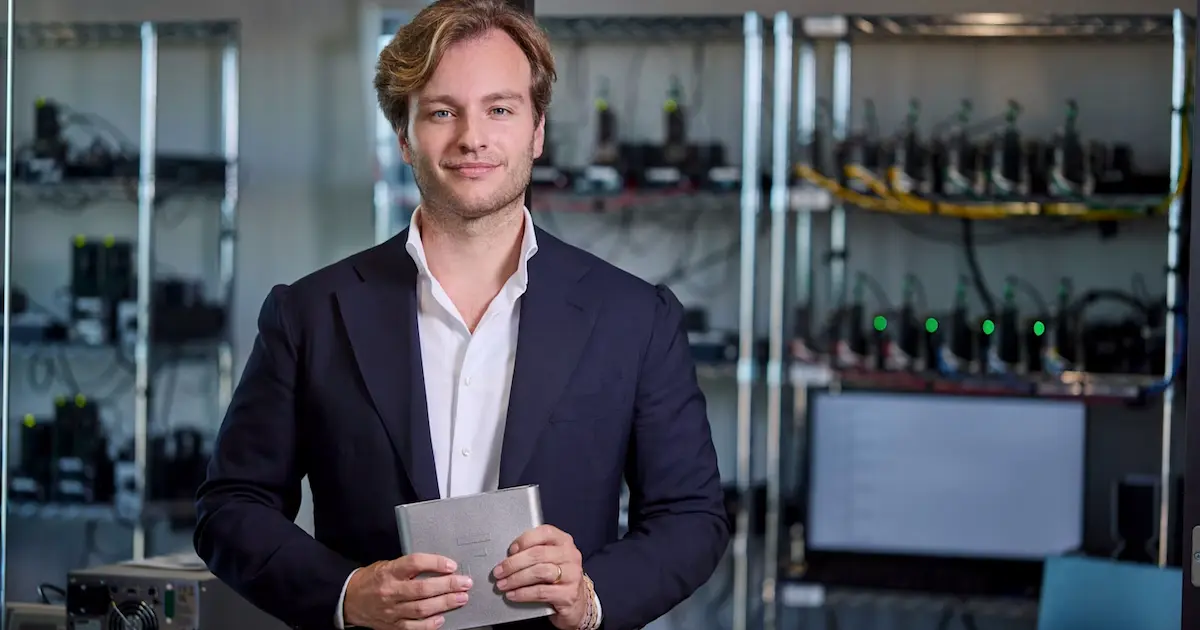
Fortaegis, an Amsterdam-based chip security startup, just closed a $50 million Series A to move its encrypted silicon technology into commercial production by 2027. The round was led by Singapore-based Serendipity Capital with backing from Tokyo Electron's venture arm and investors from defense, manufacturing, and critical infrastructure sectors. What matters is who's investing and why: this is a geopolitical bet on quantum-resistant encryption becoming infrastructure, not nice-to-have.
The technology itself is elegant. Fortaegis uses the unique physical fingerprint each silicon chip acquires during manufacturing to generate encryption keys that don't live in software or fixed memory. That means the keys change constantly and aren't vulnerable to traditional decryption attacks. It's not a math problem to solve; it's a physics problem. For defense, autonomous systems, and AI datacenters, that's the difference between current security and future-proof security.
Fortaegis is already in talks with US hyperscalers and has collaboration agreements with companies across multiple countries. ASML and Eindhoven University of Technology are working with them on a security framework for autonomous AI systems. The company is targeting defense equipment, satellites, autonomous machines, and AI infrastructure. All the things that need to stay secure when quantum computing arrives.
The UK angle here is indirect but significant. UK defense procurement is under pressure to adopt quantum-resistant encryption standards. The National Cyber Security Centre and GCHQ have been signalling that post-quantum cryptography adoption is now urgent, not optional. Meanwhile, UK hyperscalers and datacenters are facing the same AI infrastructure security demands as their US counterparts. Fortaegis' approach sidesteps the quantum problem entirely by making encryption keys physical rather than mathematical.
What this really signals: encrypted silicon isn't hype anymore. It's infrastructure. The US is moving on quantum-resistant standards, Europe is building sovereign tech stacks, and the UK is still deciding what side of the fence it's on. When Tokyo Electron and defense investors pile in, it's not because they like the story; it's because they think this is how secure networks look in a decade. That's the bet Fortaegis just got funded to prove.
For capital flows, watch three things. First, EU defense budgets increasingly fund quantum-resistant infrastructure. Second, hyperscalers adopting chip-based encryption as a compliance and marketing differentiator. Third, any UK government procurement signals around sovereign AI infrastructure. If Fortaegis lands a UK MOD contract or gets integrated into UK datacenters, that's a signal that encrypted silicon moved from research to procurement reality. Commercial production in 2027 makes that window tight, but doable.