
Trump Just Drew a Line. The US and Europe Are Now on Opposite Sides of AI.
Trump rejected AI safety guardrails and attacked Anthropic's Dario Amodei directly. For UK and European businesses, the regulatory fork just became real.

Focused on business and markets coverage across the UK, Europe, and the United States. His writing has been featured in Business Insider and USA TODAY.
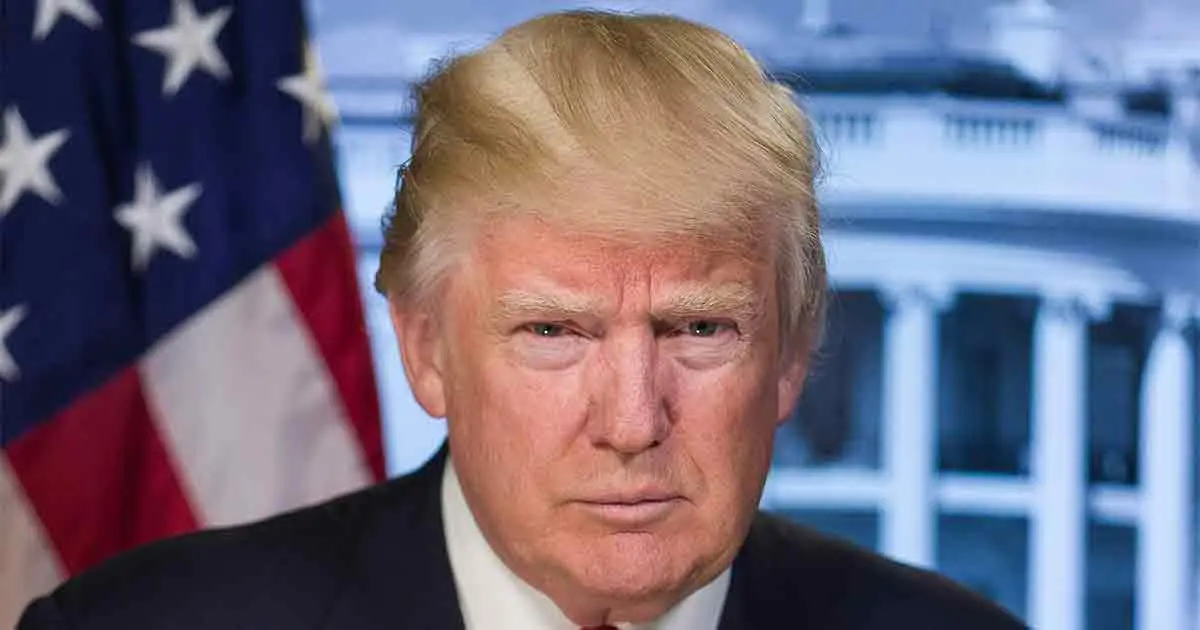
On Monday, President Trump directly attacked Anthropic CEO Dario Amodei for calling for a slowdown in AI development, insisting that the only guardrails artificial intelligence needs is "a STRONG AND SMART PRESIDENT." The message was unambiguous: the Trump administration will not regulate AI in ways that slow its growth. The U.S. will race. Everyone else can decide what they're comfortable with.
This wasn't rhetoric. It was a strategic declaration. And it fundamentally reshapes the competitive landscape for every business building or deploying AI globally.
The Regulatory Fork
What happened this weekend was the collision of two irreconcilable positions. Dario Amodei published an essay arguing that AI companies need safety controls, independent evaluations, and time to develop guardrails before pushing capability improvements further. Sam Altman and Elon Musk publicly agreed. This was the rare unified voice of AI leadership saying: slow down.
Trump's answer is simple: get out of the way. American companies don't need federal permission or regulation. They need speed. China's the threat. Whoever moves fastest wins geopolitically.
And here's where it gets uncomfortable. The EU has already chosen caution. Brussels is building walls around AI development. The UK? You're caught between two impossible choices: race like the Americans and risk your regulators coming down hard, or move cautiously and watch U.S. competitors lap you. Meanwhile, the companies that'll dominate the next five years are the ones operating with almost zero friction. Guess where that is.
What This Means for UK Businesses
The strategic divergence creates immediate complications for companies operating across geographies:
Investment flows accelerate toward US-regulated AI. Capital will follow the least constrained regime. US AI companies can iterate faster, deploy with fewer compliance overhead, and reach scale more quickly. European (and UK-based) AI startups face competing regulatory regimes and slower deployment timelines. For UK founders, this is compounded: follow US speed and risk regulatory backlash at home, or move more cautiously and watch US competitors lap you.
Talent concentration shifts westward. If the best work happens fastest in the U.S., engineers and researchers follow. The UK's AI talent pool faces pressure to either decamp to Silicon Valley or work for American companies. Brain drain accelerates.
Supply chain dependency grows. If U.S. companies can innovate and scale faster without regulatory friction, they'll dominate foundational models and infrastructure. European companies become downstream consumers rather than competitors. UK businesses will likely depend on American AI platforms for enterprise applications, creating structural dependency on U.S. policy whims.
Regulatory arbitrage becomes a business decision. Any UK company serious about scaling AI must choose: operate under UK/EU rules and move slower, or relocate or partner with U.S. entities to access faster iteration cycles. That's not a trivial choice.
The Bigger Problem
Trump's framing exposes something deeper: he's arguing that safety concerns are secondary to competitive advantage. That's a coherent position if you believe geopolitical dominance matters more than internal risk mitigation. But it's only coherent for a government. For businesses, it's a trap. Companies still face product liability, brand risk, and regulatory whiplash when government priorities shift.
What looks like freedom now (no guardrails, rapid deployment) can become a vulnerability later if regulatory intervention comes suddenly. The U.S. could move from maximum freedom to heavy-handed restriction overnight depending on a triggering incident.
For UK businesses, there's an additional layer: you're not in the U.S., so you don't get the benefit of the speed advantage and you can't escape the regulatory downside. You're competing against companies that are.
The Fork Is Real
The regulatory split between the U.S. and Europe (and by extension, the UK) is no longer theoretical. It's policy now. American AI companies will move faster. European ones will move more carefully. UK companies are stuck in between, facing pressure from both directions.
For executives, the implication is clear: your AI strategy can't be neutral anymore. Either you're operating in the accelerated regime (which means U.S. infrastructure, likely U.S. partnership or relocation), or you're operating in the constrained regime (which means slower deployment but alignment with your home market rules).
This follows directly from the market repricing of AI safety demands that hit Wall Street days earlier. There's no comfortable middle anymore. That fork is closed.