
Trump's Falklands Warning Changes UK Business Risk
Trump has signalled the US security guarantee is now negotiable, using the Falklands as leverage. That's a new risk calculation for every UK business with US exposure.

Focused on business and markets coverage across the UK, Europe, and the United States. His writing has been featured in Business Insider and USA TODAY.
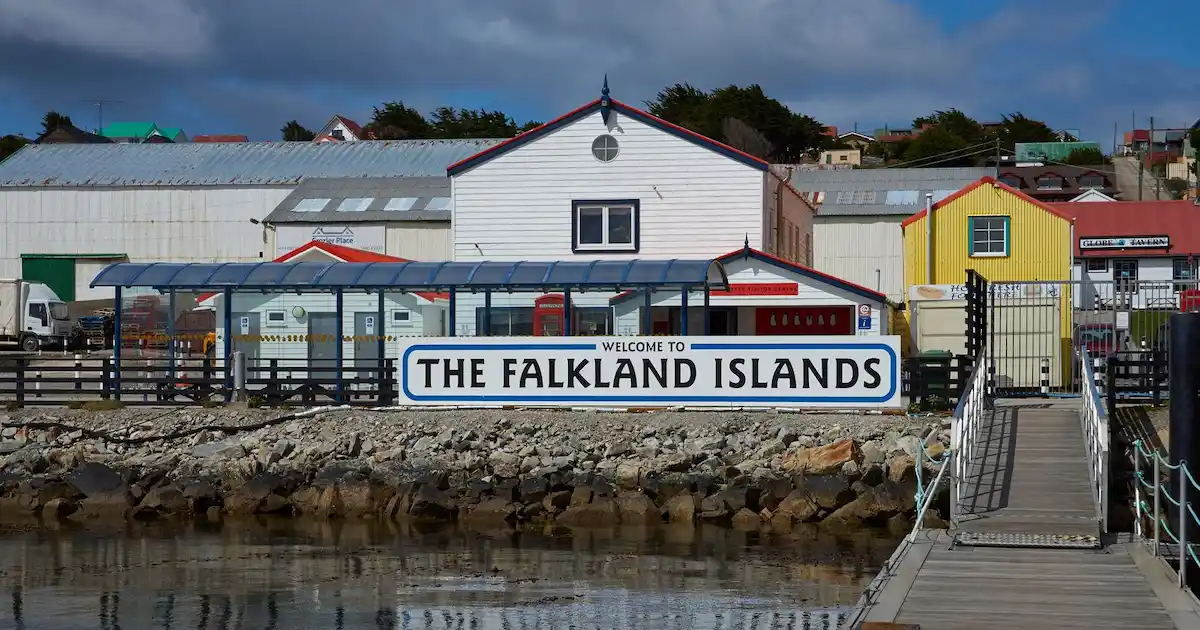
Donald Trump just told the UK something it didn't want to hear: American security guarantees are now negotiable. And he's using the Falkland Islands as the bargaining chip.
His message to Andy Burnham was pointed. The UK wasn't there to help on Iran. You're dependent on the Strait of Hormuz for oil. The Falklands are very far away. So if Argentina invades, don't expect American support.
That's not a policy position. That's a transaction waiting to happen.
The Business Risk
For UK companies, this signals something fundamental has changed. The US security guarantee that underpinned British business confidence for 70 years just became a line item in trade negotiations.
Oil companies operating in the South Atlantic like Navitas Petroleum are already getting sandwiched. Argentina has already imposed sanctions on Falklands oil exploration. Now they know the US won't necessarily back UK claims. Investment hedges disappear. Project returns become uncertain. Capital gets reallocated elsewhere.
But it's bigger than oil. Defence contractors, financial services, tech firms building on the assumption of a stable US-UK alliance. That assumption just got weaker.
Transactional Geopolitics
Trump's pitch is explicit: help me on issues I care about, and I'll back you on yours. Don't, and don't expect support when you need it.
That's how he runs business deals. Alliances are now being treated the same way. You get what you pay for. The UK gets favourable trade terms or military support when it suits American interests, not because of historical partnership.
Foreign investors are watching this closely. If the UK's security alliance is transactional and conditional, what's the stability premium worth? Why not invest in countries with clearer guarantees or more predictable relationships?
What British Businesses Should Do Now
First: stop assuming the US security guarantee is automatic. It isn't anymore. Build redundancy into operations, especially in contested regions like the South Atlantic.
Second: understand that trade negotiations with the US will now include geopolitical elements. The Falklands aren't just about sovereignty anymore. They're a negotiating tool Trump will use to extract concessions on trade, Iran policy, or NATO spending.
Third: diversify away from the assumption that the US and UK interests are aligned by default. They're aligned when Trump decides they are.
The Context Trump Ignored
The 1982 Falklands War cost 255 British service deaths in just over 70 days. Argentina lost 649. Three Falkland Islanders died. In 2013, Falkland Islanders voted 99.8 per cent to remain a British overseas territory. Three votes against out of 1,518 cast.
That's not a disputed territory. It's a population that has made its democratic choice abundantly clear. Trump's casual suggestion that the UK might not defend them signals that democratic will doesn't matter when geopolitical leverage is on the table.
For British businesses, the message is starker: if Trump can ignore the democratic wishes of 1,513 people, institutional commitments are even thinner.
The bigger pattern: Trump is signalling that American foreign policy operates on deal logic, not alliance logic. Every country, every relationship, every commitment is on the table. Britain just learned it can't assume anything.
That's a different risk calculation for every business with US exposure.